12 min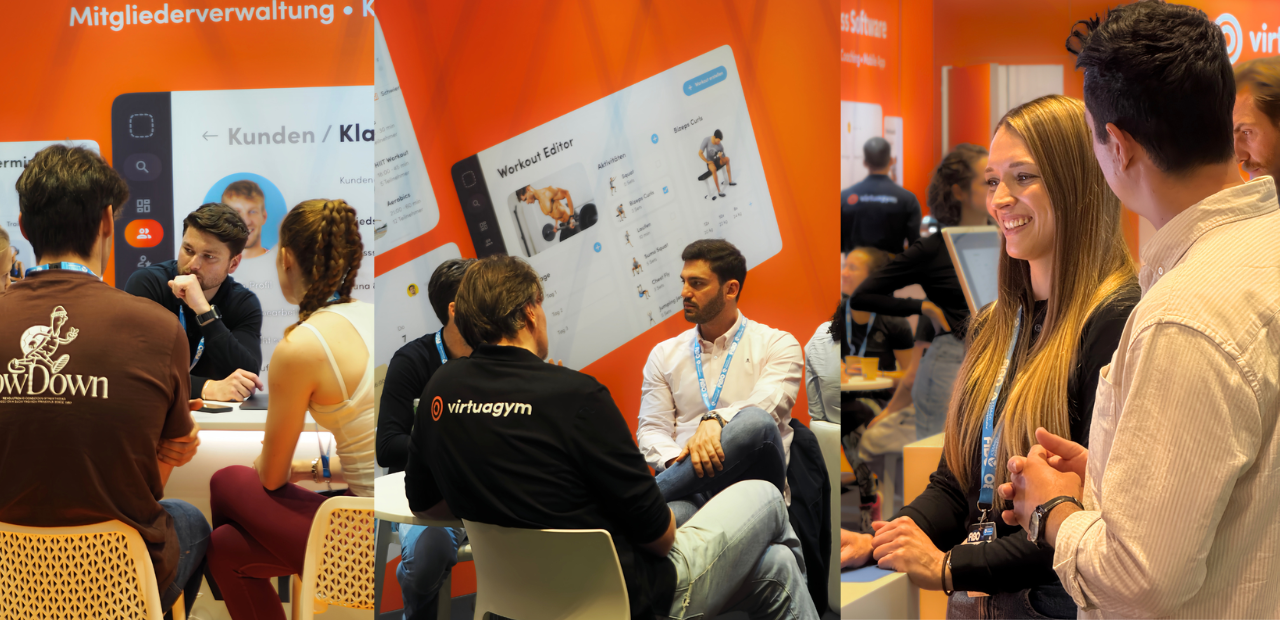
FIBO 2026 confirmed something the fitness industry can no longer ignore: gyms are evolving into health, wellness, and performance ecosystems.
This year’s edition of FIBO Cologne brought together more than 175,000 visitors, over 1,000 exhibitors, and fitness industry leaders from 136 countries. But beyond the numbers, the event revealed where the global fitness market is heading in 2026 and beyond.
Artificial intelligence.
Longevity.
Boutique fitness.
Recovery.
Hybrid training.
Connected wellness.
Those weren’t side conversations anymore. They dominated the event.
For gym operators, boutique studios, personal trainers, and fitness businesses, FIBO 2026 became a real-time look at the next phase of the fitness industry.
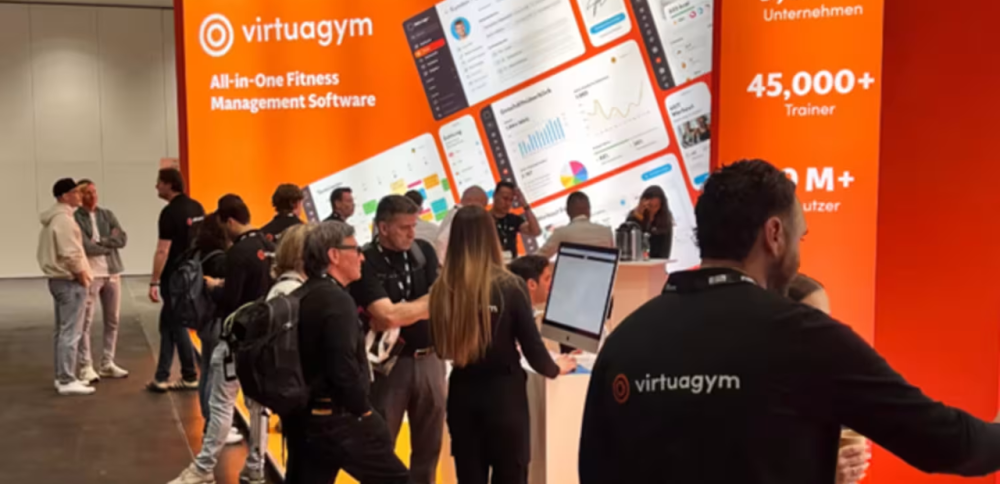
Virtuagym attended FIBO 2026 in Cologne to speak directly with operators, coaches, studio owners, and technology partners across Europe. These were the biggest fitness industry trends, business insights, and strategic takeaways from the world’s largest fitness trade show.
FIBO 2026 — Virtuagym at the World’s Biggest Fitness Trade Show
At FIBO Cologne 2026, one question came up constantly at the Virtuagym stand:
“How do we grow without losing the human side of fitness?”
That tension defined much of this year’s event.
Fitness businesses want:
- More automation
- Better retention
- Smarter operations
- Faster onboarding
- Personalized coaching
- Higher member engagement
At the same time, they’re trying to protect community, coaching quality, and member experience.
That’s why AI fitness tools generated so much attention during FIBO 2026.
Operators are no longer looking at artificial intelligence as a futuristic concept. They’re looking for practical solutions that reduce operational pressure while improving customer experience and business growth.
The strongest conversations around MAX AI Coach focused on:
- AI coaching workflows
- Predictive member engagement
- Hybrid coaching models
- Automated communication
- Personalized fitness experiences
- Retention optimization
- Data-driven coaching
Another major topic quickly emerged across conversations with gym owners and studio operators:
Digital fragmentation.
Many fitness businesses still rely on disconnected systems, outdated software, and multiple apps that create friction for both staff and members.
That’s becoming a serious competitive problem.
Especially as Gen Z and younger consumers expect seamless digital experiences across every part of their daily life.
The shift happening across the fitness industry is bigger than technology adoption.
Fitness businesses still treating digitalization as an ‘extra tool’ are starting to fall behind.
Explore how our fitness studio software helps gyms simplify operations, improve retention, and create connected member experiences.
Discover how MAX AI Coach helps fitness businesses scale personalization through AI-powered coaching and automation.
The Biggest Fitness Trends from FIBO 2026
AI & Digitalization Are Reshaping the Fitness Industry
Artificial intelligence became the defining topic of FIBO 2026.
But unlike previous years, the conversation changed significantly.
In FIBO 2024 and FIBO 2025, AI still felt experimental. At FIBO 2026, it became operational infrastructure.
One of the busiest areas during the fitness expo Germany 2026 was the Future Forum inside the Confex Hall, where discussions focused heavily on AI fitness trends 2026, predictive systems, automation, and digital transformation.
A standout session was “Fitness 2050 – Holodeck meets Digital Twin,” which explored how generative AI and industrial AI are evolving beyond simple automation toward predictive health ecosystems capable of analyzing movement, behavior, recovery, and performance in real time.
That matters because the fitness industry is under pressure from every direction.
Operators face:
- Staff shortages
- Rising operational costs
- Higher retention pressure
- Growing boutique competition
- Increasing member expectations
At FIBO 2026, AI was no longer positioned as innovation. It was positioned as operational survival.
The role of AI in fitness is expanding rapidly:
- Personalized coaching
- Predictive diagnostics
- Retention automation
- Lead nurturing
- Smart communication
- Remote coaching
- Data analysis
- Member engagement
Another major trend at FIBO 2026 was the rise of integrated ecosystems.
Fitness businesses are moving away from fragmented apps and disconnected tools toward centralized platforms where CRM, coaching, communication, scheduling, and reporting work together inside one connected environment.
That shift is accelerating because personalization is becoming a standard expectation.
Especially for Gen Z.
Younger audiences expect fast, frictionless, mobile-first fitness experiences. They want onboarding, coaching, communication, and progress tracking to feel intuitive and personalized from day one.
The operators adapting fastest are simplifying everything.
Fewer systems.
Less friction.
Smarter workflows.
Better personalization.
That’s where the next phase of fitness digitalization is heading.
Longevity, Recovery & Holistic Health Become Core Business Models
One of the strongest fitness industry trends 2026 was the rise of longevity-focused fitness.
Not anti-aging marketing.
Real long-term health positioning.
The concept of the “longevity athlete” appeared repeatedly throughout FIBO Cologne 2026. More consumers are training not only for aesthetics or short-term performance, but for mobility, energy, recovery, and quality of life over decades.
That shift is reshaping the entire fitness market.
Especially as older adults become one of the fastest-growing target groups across Europe.
Operators increasingly see active aging, functional health, and recovery services as major business growth opportunities for the next decade.
That’s changing programming priorities fast.
More fitness businesses are investing in:
- Functional strength training
- Recovery zones
- Mobility coaching
- Personalized health tracking
- Wellness services
- Preventive health
- Recovery technology
- Holistic health experiences
For the first time, longevity had a clearly visible identity throughout FIBO 2026 instead of being treated as a niche wellness category.
Recovery technologies also exploded across the event.
Next-generation recovery tools included:
- AI-driven wellness systems
- Wearable recovery technology
- Hypoxic training systems
- VO2 max optimization tools
- Smart recovery equipment
- Personalized wellness diagnostics
The integration of wellness, recovery, mental wellbeing, and lifestyle products showed how quickly fitness is evolving beyond workouts alone.
The strongest operators at FIBO 2026 weren’t positioning themselves simply as gyms anymore.
They were positioning themselves as long-term health partners.
Explore how nutrition coaching software helps create personalized health and wellness experiences.
Pilates, Boutique Fitness & Female Strength Training Continue Rising
FIBO 2026 confirmed another major industry shift:
Boutique fitness continues driving personalization across the entire fitness market.
Especially among younger generations.
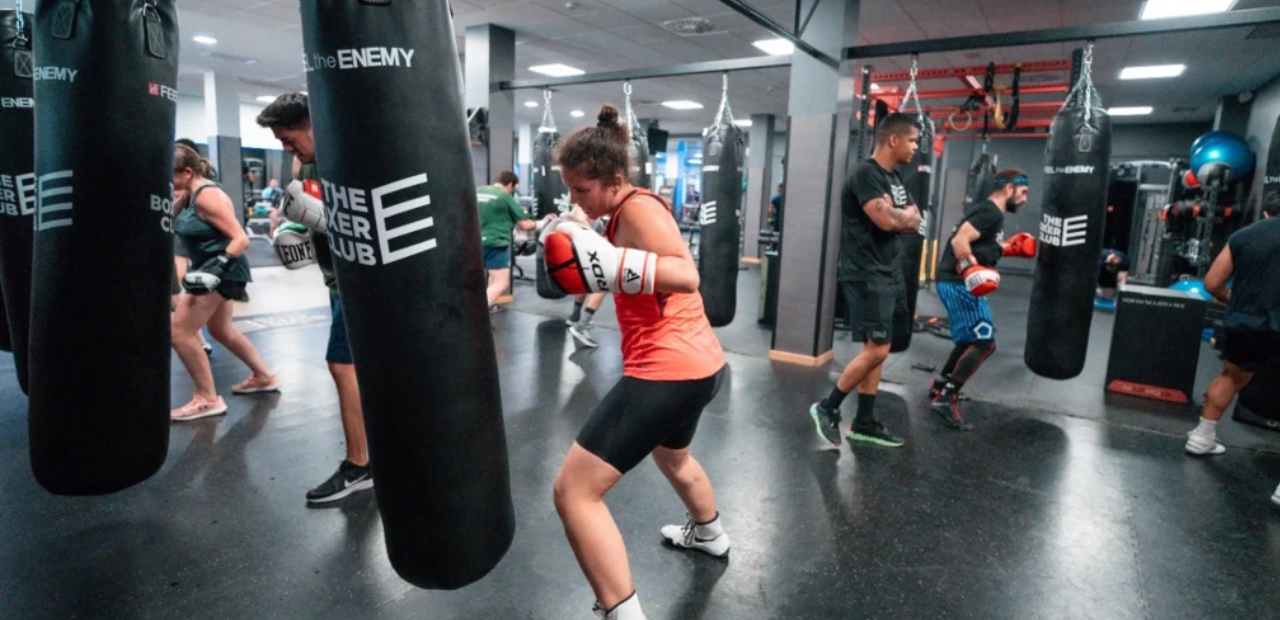
Boutique fitness keeps growing because many consumers no longer choose gyms based only on equipment. They choose environments that reflect their identity and lifestyle.
That explains the massive growth of boutique studios, reformer Pilates, and female-focused strength training concepts across FIBO Cologne 2026.
Connected Pilates reformers generated significant attention throughout the event as brands integrated digital experiences and on-demand workouts into traditional equipment models.
Technogym, Nautilus, and several emerging companies showcased connected reformer systems designed around personalization, accessibility, and hybrid digital experiences.
Another visible trend was the rise of:
- Screen-led fitness classes
- Semi-automated coaching
- Digital class programming
- Smart equipment integration
- Flexible coaching models
Much of that growth is connected to ongoing staffing challenges across the fitness industry.
Many operators see automation as necessary because of staffing shortages, but several also questioned how far fitness can automate before the experience starts feeling impersonal.
But this also created one of the most important debates at FIBO 2026:
How much automation can fitness introduce without losing community and human connection?
Because despite the rise of AI and smart technology, one thing became very clear during the event:
Community remains one of the strongest retention drivers in fitness.
HYROX, Hybrid Athletes & Community-Led Fitness Are Reshaping Engagement
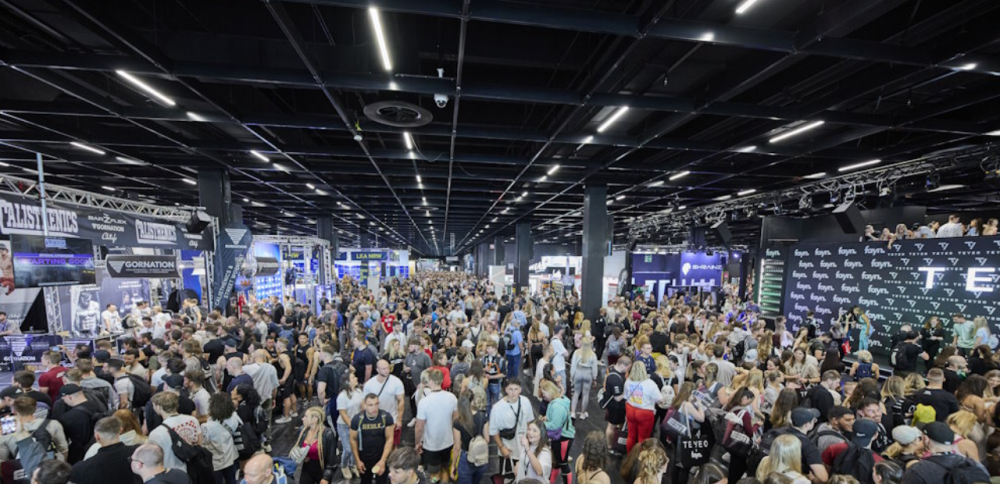
HYROX became one of the biggest attractions at FIBO 2026.
The event hosted approximately 8,000 HYROX participants during the exhibition weekend, reinforcing the rise of hybrid fitness and competitive community-driven training.
The growth of HYROX reflects a much bigger shift happening across the fitness industry.
Consumers increasingly want experiences combining:
- Strength
- Endurance
- Competition
- Community
- Progress tracking
- Social connection
Hybrid fitness formats are growing because they create stronger emotional engagement than traditional gym models alone.
Members don’t simply train.
They belong.
That sense of belonging is becoming commercially valuable.
Many operators at FIBO 2026 no longer viewed HYROX-style training as a temporary trend. They viewed it as a retention and engagement model capable of increasing attendance, loyalty, and community connection.
The strongest clubs increasingly build experiences around:
- Challenges
- Group performance
- Shared progress
- Social accountability
- Gamification
- Competitive events
Fitness is becoming social again.
And for many gyms, that’s becoming one of the biggest competitive advantages against low-cost operators.
Learn how stronger customer retention strategies improve long-term engagement and member loyalty.
Wellness Is No Longer a Trend. It’s the New Foundation of Fitness.
Perhaps the most important shift at FIBO 2026 wasn’t technological.
It was philosophical.
The industry is moving from “fitness” toward “health-first fitness.”
Entire halls at the event focused on:
- Wellness
- Recovery
- Mental wellbeing
- Lifestyle products
- Longevity
- Holistic health
- Regeneration
- Accessible health experiences
That shift reflects changing consumer behavior worldwide.
People increasingly view training as part of:
- Stress reduction
- Energy management
- Mental wellbeing
- Preventive healthcare
- Lifestyle optimization
- Long-term performance
The fitness industry is adapting quickly.
Operators are creating more integrated experiences combining:
- Coaching
- Recovery
- Nutrition
- Wellness
- Community
- Digital tools
- Lifestyle support
The question consumers are asking is changing.
Not:
“How fast can I transform?”
But:
“How well can I live long term?”
That mindset shift may become the single biggest business opportunity in fitness over the next decade.
EHFF 2026 — Key Insights from the European Fitness Industry
The European Health & Fitness Forum once again reinforced several trends shaping the future of the European fitness market.
According to discussions led by EuropeActive and Deloitte, the fitness industry continues showing strong growth across Europe, but consumer expectations are evolving even faster.
Modern fitness consumers increasingly expect:
- Personalization
- Flexibility
- Digital integration
- Community
- Wellness services
- Holistic health support
Operators relying purely on traditional gym models are starting to feel growing competitive pressure.
The market is shifting toward connected ecosystems where technology, coaching, wellness, and personalization work together inside one integrated member experience.
The European Fitness Market in 2025 — Key Numbers Behind the Growth
According to the European Health & Fitness Market Report 2025 by EuropeActive and Deloitte , the European fitness industry continues growing in both memberships and revenue.
But the growth story is evolving.
The market isn’t expanding only because more gyms are opening.
It’s expanding because fitness is increasingly connected to:
- Preventive health
- Longevity
- Recovery
- Mental wellbeing
- Lifestyle optimization
- Holistic wellness
Demand continues rising around:
- Boutique studios
- Personalized coaching
- Connected technology
- Smart equipment
- Wellness experiences
- Hybrid training
- Recovery services
The operators growing fastest are the ones building experiences people want to stay connected to long term.
FIBO 2025 — Recap & Highlights
FIBO 2025 already highlighted several trends that accelerated in 2026, including AI coaching, hybrid training, recovery technologies, and connected tech ecosystems. More organizations also started investing heavily in personalization, automation, and smart fitness experiences, while innovation awards and top prize categories increasingly focused on digital transformation across the fitness industry.
FIBO 2024 — Recap & Highlights
FIBO 2024 marked an important transition toward connected fitness, boutique experiences, and integrated wellness concepts. The conversation focused heavily on innovation, digital control, and easier access to connected fitness experiences. By 2026, those innovations had evolved into full operational strategies.
FIBO 2023 — Recap & Highlights
FIBO 2023 helped accelerate early discussions around connected fitness, wearables, AI experimentation, and automation. The event expanded industry knowledge around digital transformation, while showing how AI continues evolving across coaching, recovery, and personalization. Early concepts around physical AI and connected fitness technologies also started gaining visibility throughout the industry.
FIBO 2027 — Save the Date
The fitness industry is already looking toward FIBO 2027 .
The next edition will take place from April 8–11, 2027, in Cologne, Germany, once again bringing together gym operators, boutique studios, wellness brands, technology companies, and industry leaders from around the world.
After a year dominated by AI, longevity, recovery, personalization, and digital transformation, expectations for FIBO 2027 are even higher.
Everything points toward deeper integration between:
- Health
- AI
- Data
- Coaching
- Recovery
- Wellness
- Personalized fitness experiences
The next phase of the fitness industry is already starting.
Frequently Asked Questions
When did FIBO 2026 take place?
FIBO 2026 took place from April 16 to 19, 2026, in Cologne, Germany. The trade show once again served as the premier gathering place for professionals, companies, decision makers, and operators in the European fitness industry, establishing itself as one of the key events for discovering the major fitness trends of 2026.
Where was Virtuagym located at FIBO 2026?
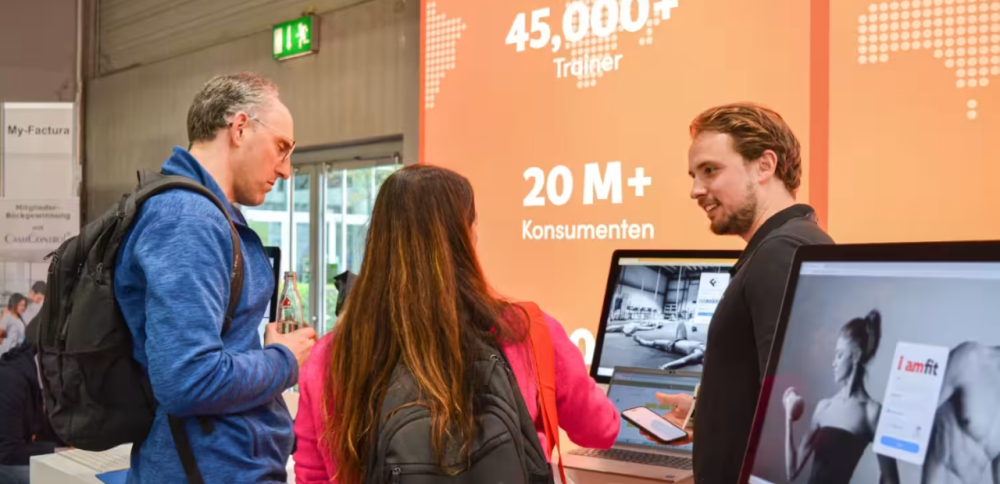
Virtuagym attended FIBO 2026 with its own stand, showcasing solutions focused on AI fitness, automation, personalized programs, and gym management. The team also spoke with operators from Spain and across Europe about retention, digitalization, business growth, and how AI agents are starting to reshape everyday life inside fitness businesses.
What were the biggest fitness trends at FIBO 2026?
The biggest trends included artificial intelligence, wellness, longevity, functional training, boutique fitness, and connected platforms. Community-driven experiences, movement, and personalized fitness journeys for different target groups also gained major attention during the event.
How many visitors attended FIBO 2026?
FIBO welcomed 175,173 visitors, exhibitors, industry leaders, and international fitness, wellness, and health operators. The event confirmed both the growth of the fitness industry and the increasing importance of innovation across the global market.
When is FIBO 2027?
FIBO 2027 will take place from April 8–11, 2027, in Cologne, Germany, where fitness companies, technology providers, and managing directors from across the industry are expected to return for another major edition of the event.
What is EHFF?
EHFF stands for the European Health & Fitness Forum, one of the fitness industry’s most important events focused on market insights, consumer trends, business growth, and industry transformation. The forum regularly attracts decision makers, operators, and industry experts from across Europe.
Why is FIBO important for gym operators?
FIBO helps gyms discover new technologies, analyze industry trends, understand changing consumer behavior, and identify new business growth opportunities. It also allows operators and boutique studios to better understand where the fitness business model is evolving next and how technology increasingly influences everyday life inside fitness clubs.
What technologies stood out at FIBO 2026?
The most discussed technologies at FIBO 2026 included AI-powered coaching systems, connected Pilates reformers, smart equipment, wearable recovery tools, predictive diagnostics, hypoxic recovery systems, and integrated fitness platforms. Wellness innovations from companies like Gharieni Group also attracted significant attention throughout the event.
What role did the Women’s Leadership Summit play at FIBO 2026?
The Women’s Leadership Summit became one of the standout discussions at FIBO 2026, highlighting leadership, innovation, and the growing influence of women across the fitness, wellness, and health industries. The summit brought together industry leaders, founders, and decision makers to discuss the future of inclusive growth within the sector.