10 min
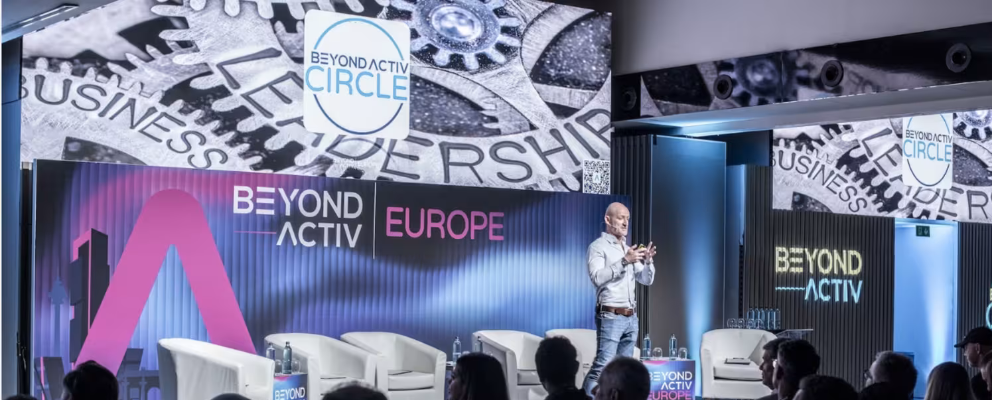
Two days in Madrid, more than 750 executives, and one question under almost every session: what does a fitness business need to get right in the next three years to stay competitive? Beyond Activ Europe 2026, held on June 24–25 at the Novotel Madrid Center, was the event’s first European edition, and the answers on stage were unusually concrete.
The short version. AI pays off when it runs inside your management platform; bolted-on apps add friction. Franchises scale on centralized member data with room for local adaptation. And the gyms best placed to grow are turning into health ecosystems, with nutrition, recovery and retention built into the membership.
This Beyond Activ Europe recap covers the three themes in order, who argued them, and the decisions any gym, studio or chain can take from them this quarter.
Beyond Activ Europe 2026 recap: 750 executives, 30 countries and a clear direction for the industry
More than 750 executives from around 450 companies and over 30 countries attended, making it one of the largest gatherings of European fitness leadership this year.
The program ran on two stages, one for leadership and one for innovation, with more than 50 speakers and over 40 exhibitors. All content was in English, which kept the room genuinely international.
Beyond Activ Europe also scheduled one-to-one meetings between operators, investors and technology partners. Several attendees named these business meetings as the most valuable part of the two days: they are built to close deals, not to swap business cards.
Beyond Activ runs a global event series, with editions in Riyadh, Australia and the United States. Madrid was its European debut.
At a glance
- Dates and venue: June 24–25, 2026, Novotel Madrid Center
- Attendance: 750+ executives, ~450 companies, 30+ countries
- Format: leadership stage, innovation stage, pre-booked business meetings
- Three strategic themes: AI as a competitive edge, franchise scalability, and the shift from gym to health ecosystem
Those three themes structure the rest of this article, and they line up closely with the wider fitness industry trends 2026 has shown so far.
Theme 1. AI in fitness: competitive differentiator or operational trap?
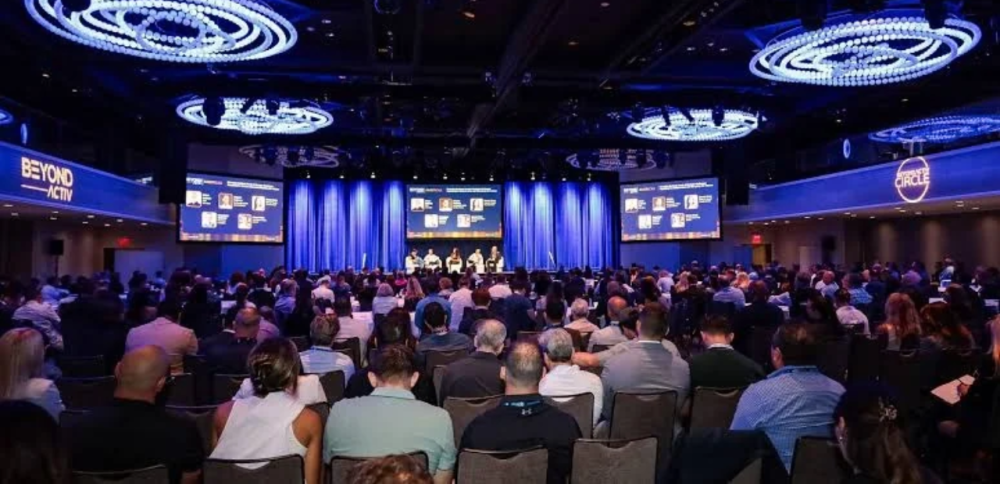
AI carried the most weight on the innovation stage. The headline keynote came from the founder and CEO of Keepme.ai, on the coming “agentic workforce” in fitness.
His argument was simple. Agentic AI, meaning systems that act on their own rather than only answer questions, is already here. Operators who build with it now will hold at least a year’s head start over those who wait for it to become standard.
A panel on how technology will reshape the industry over the next one to three years reached a clear consensus. Applied well, AI lifts retention, personalizes the member experience and frees staff for higher-value work.
Juan del Río, former CEO of VivaGym Group and now an investor in the sector, added the counterweight. Predictive models help you decide better, he said, but team cohesion is still what keeps a business standing over the long run.
Several speakers also described what AI in fitness 2026 looks like when it goes wrong. The warning signs:
- Member data spread across tools that don’t talk to each other
- Teams that can’t interpret what the AI is telling them
- Automated decisions running with no human review
What separates the two outcomes is how the AI connects to your daily operations. That is the core of any sensible fitness industry AI strategy 2026: fewer standalone apps, more intelligence inside the system your team already uses.
A practical example is workout programming. In our experience, building a training session from scratch by hand takes a coach about 40 minutes. With MAX AI Coach , the base plan is ready in around 20 seconds, and adjusting and assigning it takes 15 minutes at most. The coach keeps the judgment calls; the AI removes the blank page.
Takeaway: before adding any AI tool, check where its data lives. If it sits outside your management platform, it will probably cost you more time than it saves.
Theme 2. Franchise scalability and the ecosystem brand model
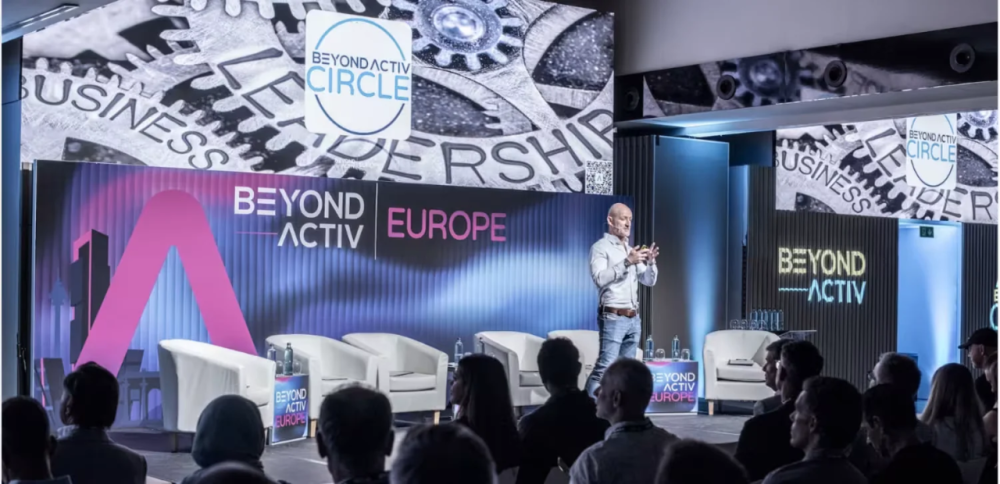
The second theme was international expansion. Executives from Basic-Fit, RSG Group, Lift Brands, Fitness Park and other multi-country chains took the stage, including a day-two panel on the true state of European franchising.
Their message was consistent. Opening more clubs each year is no longer the measure of franchise fitness scalability. What decides it is a centralized technology infrastructure that keeps the member experience consistent club after club, country after country.
The most successful franchises presented in Madrid share three traits:
- Centralized management of members and data
- Identical processes for every new club opening
- Enough local flexibility to adapt to each market
Speakers called this combination the “ecosystem brand model”: shared identity and shared technology, with real room for local decisions. It is the gym ecosystem brand model in practice.
Revenue diversification came up just as often. Investors in the room were direct: a business that depends almost entirely on monthly dues is a warning sign when they evaluate a deal.
| Single-revenue model | Diversified model | |
|---|---|---|
| Main income | Monthly membership fee | Fees plus premium services, nutrition, corporate wellness |
| Exposure to churn | High: every cancellation hits the only revenue line | Lower: members tied to several services leave less easily |
| How investors read it | Warning sign | Sign of resilience |
If your gym or chain is in a growth phase, two checks follow from this. First, whether your gym management software can run several sites from one place without losing control of the data. Second, how much of your revenue comes from anything other than the monthly fee.
Takeaway: standardize what members feel everywhere, localize what each market needs, and build at least one revenue line that doesn’t depend on the membership fee.
Theme 3. From gym to health ecosystem: the biggest structural shift in the industry
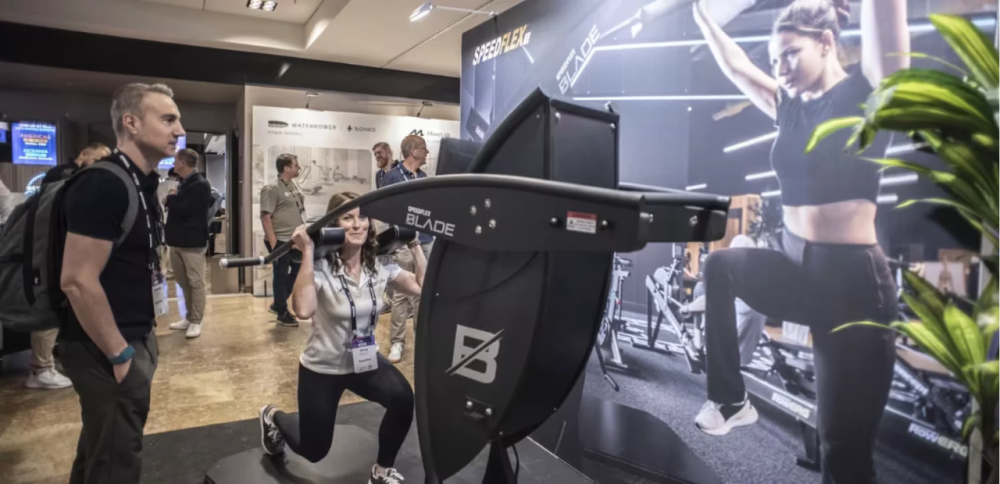
If one session captured the spirit of this edition, it was “The Healthspan Shift”. The panel brought together leaders from YMCA, MECOTEC, Precor | Peloton, Armah Sports Company and Gharieni Group.
The question was easy to ask and hard to answer: how are operators curating, integrating and monetizing longevity and wellness inside their own facilities?
The panel’s answer pointed one way. Fitness is merging with preventive health, nutrition, recovery and long-term member guidance, from the first workout to ongoing nutrition support. Many centers haven’t fully adjusted to that yet.
Sammy Gharieni, founder and CEO of Gharieni Group, brings more than 30 years in wellness and medical spa technology and a presence in 120 countries. From that vantage point, he described the convergence of fitness and medical health as something already happening.
YMCA’s keynote on its own health transformation plan made the same point from a public-health angle. Moving from sick care to healthcare means fitness facilities take an active role in prevention, beyond the individual workout.
For centers that want to move from fitness to wellness, the event put three building blocks on the table:
- A nutrition coaching module that is part of the member’s daily experience
- A retention planner that flags members at risk before they cancel
- Community programs and challenges, so the club is more than a place for solo training
Retention dominated the informal conversations during breaks and networking dinners. The reason is simple: keeping an existing member costs far less than winning a new one, and a member who uses several services has more reasons to stay.
None of this appeared out of nowhere. Two months earlier, our FIBO 2026 recap from Cologne recorded the same move toward longevity and holistic health on the trade-show floor.
Takeaway: the fitness wellness ecosystem starts with three basics, nutrition, retention tracking and community, connected in the same platform the member already uses.
The Spanish market opportunity: why Madrid was no accident

Beyond Activ didn’t pick Madrid at random, and several speakers said so on stage. Spain has spent years consolidating its position as one of Europe’s main fitness hubs.
Steady sector growth, a constant flow of international investors and rising demand for wellness services make the Spain fitness market 2026 an attractive entry point, especially for brands planning European expansion.
The agenda reflected that. A dedicated day-two session looked at the growth strategies behind Iberia’s leading operators, with executives from Synergym, SC Fitness, Brooklyn Fitboxing, Balance Company and ABC EVO.
Madrid itself offers first-class hotel infrastructure, strong international connections and a mature business ecosystem. Directors and investors repeated that point both on the main stage and in the networking areas.
The next European edition moves to Barcelona, which confirms Spain’s role as a reference market for the industry.
Takeaway: for international brands, Spain is no longer a secondary market to enter after the big ones. It’s where European fitness leadership now meets.
What Virtuagym takes away from Beyond Activ Europe 2026
The three themes of this edition, AI, franchise scalability and health ecosystems, aren’t abstract ideas from a distant stage. Each one translates into a decision a gym can start on this week:
- AI: choose tools that work inside your daily operations, and audit any app that keeps data outside your main platform.
- Scalability: centralize member management from the first club, before the second opening makes it harder.
- Health ecosystem: get the basics right first: smooth onboarding, a booking app members actually use, automated email reminders that keep them connected, and at least one service beyond the monthly fee.
Across the two days, the pattern we heard most is the one we see across the thousands of fitness businesses we work with. The operators pulling ahead aren’t the ones with the most technology. They are the ones whose technology, team and services work as one system.
Ready to put these three themes to work before your competitors do? Book a free demo and we’ll show you where to start, whether you run one studio or a multi-country chain.
FAQ
What is Beyond Activ Europe?
Beyond Activ Europe is the European edition of Beyond Activ, a global leadership, investment and business development event for owners, managers and investors of health, fitness and wellness brands. Its first edition took place in Madrid on June 24–25, 2026, at the Novotel Madrid Center.
What were the main Beyond Activ Europe 2026 themes?
The agenda centered on three themes. AI as a competitive differentiator for operators, franchise scalability through the ecosystem brand model, and the transformation of gyms into integrated health and wellness ecosystems that combine training, nutrition, recovery and retention.
Which companies were represented at Beyond Activ Europe 2026?
Companies in Madrid included Basic-Fit, RSG Group, Virgin Active, Technogym, PureGym, Lift Brands, Les Mills International, Gharieni Group, Fitness Park, YMCA, Precor | Peloton and Keepme.ai. In total, around 450 companies from more than 30 countries took part.
What did fitness leaders say about AI at Beyond Activ Europe 2026?
Agentic AI is no longer optional for operators. Implemented well, it improves retention and the member experience and frees staff time. Implemented badly, with data scattered across disconnected tools and no human oversight, it creates operational friction instead of value.
What is the Beyond Activ 2027 calendar?
Beyond Activ World returns to Riyadh, Saudi Arabia, on February 3–4, 2027. It is followed by an edition in Bangkok, Thailand, on May 12–13, and the European edition in Barcelona, Spain, on June 21–22, 2027, continuing the series’ expansion as a global industry platform.
Why did Beyond Activ Europe choose Madrid in 2026?
Madrid was chosen for the growing weight of the Spanish fitness market, the steady inflow of international investment, and the city’s role as a European hub for health and wellness business. Its hotel infrastructure and international connectivity also made it a natural host for 750+ executives.