10 min
Your trainers lose evenings building programs, and every new member adds another month of sessions to plan. In 2026, AI in the fitness industry is cutting into exactly that work.
In our experience, a trainer needs around 40 minutes to build one session from scratch. With AI, the draft takes under 20 seconds and fine-tuning brings the total to 15 minutes at most.
Members still want people. Only 10% of gym-goers would choose AI guidance over a human coach, according to Les Mills’ 2026 Global Fitness Report , based on more than 10,000 consumers. US demand for trainers is projected to grow 12% by 2034 .
AI takes the planning and admin hours, and coaching becomes the part members pay for. Here’s where those hours sit, which tools free them, and where to draw the line.
The AI Fitness Market at a Glance
AI went mainstream in business before it reached the gym floor. According to Eurostat , 20% of EU companies with 10 or more staff used AI in 2025, up from 13.5% in 2024 and 8.1% in 2023.
Most of that use is practical. Among companies using AI, 34.7% apply it to marketing or sales and 31% to business administration.
In fitness, adoption looks different depending on who you ask:
- Trainers: around 52% use AI daily or several times a week, according to ISSA’s Human Advantage report . The sample was 90 students and graduates, so read it as a direction.
- Members: 35.3% use AI tools regularly or occasionally for workouts, nutrition or health, per the Life Time 2026 Wellness Survey .
- Gyms and studios: no independent survey has measured operator adoption yet. The figures in circulation are published by software vendors.
Market-size reports disagree widely. Grand View Research puts fitness apps at $12.1 billion in 2025, reaching $33.6 billion by 2033 (13.4% a year). Other firms publish estimates several times higher or lower.
For your business, the useful number is hours: how many a week AI can take off your team.
How AI Is Transforming Fitness: 8 Key Applications
1. Personalized Workout Programming
Planning is where AI saves the most time, and the maths shows why so few trainers personalize fully. At 40 minutes per session, a trainer with 20 clients on eight sessions a month would need about 107 hours of planning.
So most trainers recycle templates. Coaching tools with built-in AI change that: they draft a plan from the client’s goals, equipment and training days, and the trainer fine-tunes it.
In our experience, that takes 15 minutes per session at most. For the same 20 clients, planning drops from about 107 to 40 hours a month, freeing around 67 hours.
Kivika Fitness , a personal training center in Madrid, built its model on this. Every member gets a 100% personalized plan, with a maximum of three members per trainer.
MAX AI Coach generates each member’s monthly base. Trainers choose the exercises, set the loads and adapt each session to how the member arrives that day.
Co-founder Jose’s verdict: with that base, choosing exercises and readjusting loads takes far less time than preparing eight sessions by hand.
2. Real-Time Form Analysis & Movement Correction
Computer vision tools use a phone or camera to track joint angles and count reps. They help you spot patterns across sessions, such as a knee that drifts inward as fatigue builds.
Real-time correction is still human work. Trainers in ISSA’s survey named form correction, rapport and motivation as tasks AI can’t replicate. Use the data to prepare your cues, and deliver them yourself.
3. AI-Powered Nutrition & Meal Planning

AI can turn a client’s food preferences into a week of meals and a shopping list in a minute. Photo-based food logging makes tracking easier to stick with.
The limit is scope. Calorie targets for medical conditions and clinical diets belong with a registered dietitian. Use AI to draft and to keep clients logging, and refer clinical questions on.
4. Smart Wearables & Health Tracking
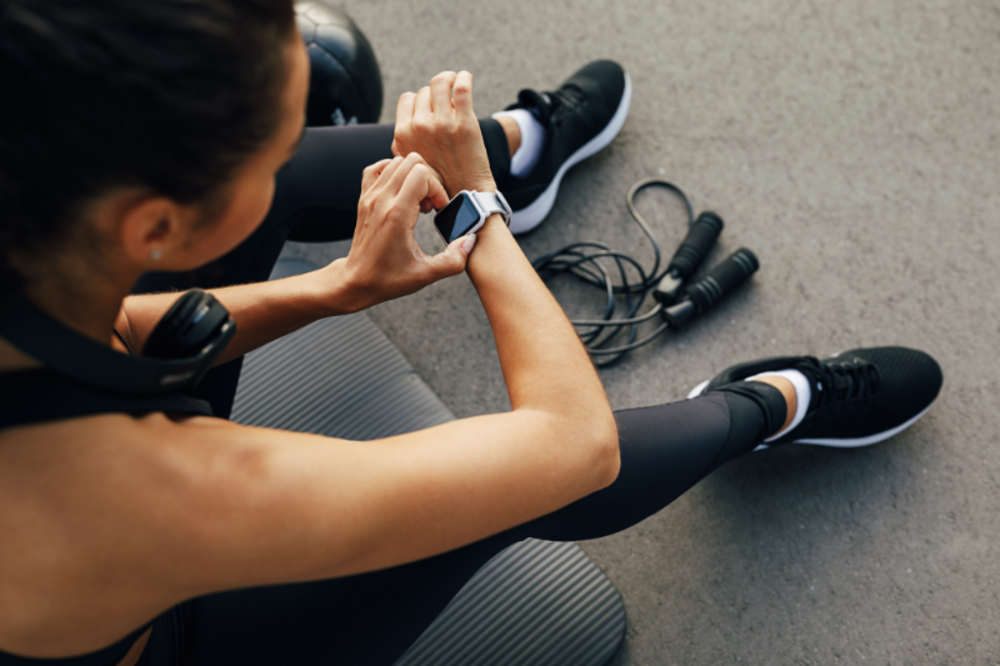
Nearly one in three US adults used a wearable to track health and fitness in 2023, according to the NHLBI . Those members arrive with sleep, heart rate and step data, and expect you to use it.
The value comes from linking that data to the plan. A low recovery score on Monday justifies a lighter session before the member has to ask. Our guide to wearable fitness technology for studios covers choosing and integrating devices.
5. Virtual Coaching & AI Chatbots
Chatbots handle the questions your front desk answers every day: opening hours, cancellation rules, how to book. That’s safe ground.
Fitness advice is riskier. Only 4% of recent users strongly trust AI-generated health information, according to ACE . Set your chatbot to pass questions about pain, injury or medication to a person.6.
6. Predictive Analytics for Member Retention
Churn usually shows up in behavior before it shows up as a cancellation. Check-ins thin out and bookings stop. AI flags that pattern while there’s still time to act.
The value is easy to calculate: each member you keep is worth their monthly fee multiplied by the extra months they stay, with no acquisition cost.
The flag only pays off if someone acts on it. An at-risk member needs a call or a personal message from a trainer they know, within days.
Absolutely Fitness runs four UK clubs with more than 7,000 members on behalf of a children’s charity. It built its retention strategy on community and reviews its business analytics every week.
Its next step is using AI to build bespoke workouts that lower the barrier to turning up.
7. AI for Gym Operations & Scheduling
Check-in and booking data show when your floor is full and when it’s empty. AI turns that history into staffing and timetable suggestions: one more coach on Monday evening, one fewer on a quiet Wednesday afternoon.
For multi-site operators, the gain grows, because each club has its own peak pattern. Rotas affect people’s income, so a manager signs off every change.
8. AI-Driven Marketing & Client Acquisition
Marketing is the most common business use of AI in Europe, per Eurostat. For a gym, that means first drafts of social posts, emails and class descriptions in minutes.
The edit is where your brand lives. Members recognize generic copy quickly, so keep a human pass on everything that goes out under your name.
AI Tools for Fitness Professionals: What’s Available Now
Choose tools by the job you need done. This overview groups the main options by function:
| Function | Examples | What it does for you | Best fit |
|---|---|---|---|
| General AI assistants | ChatGPT, Claude, Gemini | Drafts content and emails, suggests program ideas, summarizes data | Everyone, from solo PTs to chains |
| Workout programming | MAX AI Coach | Drafts personalized plans inside the coaching app for the trainer to edit | PTs and studios planning for a client list |
| Member fitness app | Virtuagym app with MAX AI Coach | AI-generated workouts and food logging for members between sessions | Members training on their own |
| Form and movement analysis | Kinetisense | Camera-based movement assessment and joint-angle tracking | Studios and clinics running assessments |
| Wearables | Apple Watch, Oura, Whoop | Sleep, heart rate and recovery data from members | Coaches who adjust load to recovery |
| Business management | Gym software and fitness studio software with analytics | At-risk member flags, scheduling data, revenue reports | Gyms and studios with staff |
Start from your biggest time cost. If planning eats your evenings, begin with programming. If members drift away, begin with analytics. Buying by brand leads to five subscriptions and no hours saved.
How to Use AI in Your Fitness Business: A Practical Guide
Getting Started with AI Tools
Start with a two-week time audit. Log every hour your team spends on four jobs: building programs, answering routine messages, scheduling and marketing.
Then put a number on each. For a trainer planning eight sessions per client a month at 40 minutes each, programming is the obvious first candidate: AI-assisted planning saves around 25 minutes per session.
Pick one job and one tool, and run it for 30 days. Compare the hours against your audit before adding anything else. If you start with programming, our MAX AI Coach prompt guide shows how to get a usable first draft.
Prompt Engineering Tips for ChatGPT
Generic prompts produce generic plans. Give the tool the same information you’d collect at intake:
Build a 45-minute lower-body strength session for a 52-year-old intermediate client with knee pain in deep flexion. Equipment: dumbbells and a cable machine. Avoid deep squats. Include sets, reps and rest times.
Then check every exercise against what you know about the client.
Integration with Your Existing Systems
A plan drafted in one app and retyped into another gives back part of the time it saved. Choose tools that write directly to where clients already see their workouts, bookings and progress.
At Kivika, a trainer opens a member’s profile and that day’s session, with last time’s loads, is already there.
The Future of AI in Fitness
Five developments are coming, at very different stages:
- Predictive injury prevention: early tools use wearable load data today, with accuracy that still varies.
- Programs for older adults and chronic conditions: the most promising segment. Members aged 55+ are the most open to AI coaching, with 13% preferring it, the highest of any age group.
- VR and AR workouts: available, still niche in commercial gyms.
- Emotional AI that reads mood: experimental.
- Genetic-based programming: speculative, with little evidence behind it so far.
Considerations & Ethical Concerns

Each risk has a practical control:
- Privacy: health, wearable and body-composition data are sensitive under GDPR. Check where each tool stores data, and whether it trains on it, before you upload client information.
- Bias: AI tools learn from data that underrepresents older, disabled and less typical clients. Review plans for those clients line by line.
- Over-reliance: an unchecked plan still carries your name. No AI plan reaches a client without a trainer’s sign-off.
- The human element: 52% of consumers lean towards a human coach (Les Mills). Tell members where you use AI and where a person decides.
Conclusion
AI is changing the fitness industry in a specific, measurable way: it takes the planning and admin hours and leaves the coaching. Cutting planning from 40 to 15 minutes per session is the difference between recycling templates and giving every member their own plan.
The businesses that gain most will spend the freed hours on the gym floor.
Give your trainers their evenings back. See how MAX AI Coach drafts personalized plans in seconds, so your team can spend that time coaching.
FAQ
How is AI used in the fitness industry?
AI is mainly used for workout programming, member communication, retention analytics and marketing. Trainers use it to cut planning from around 40 minutes per session to 15 at most. Operators use check-in data to spot members at risk of cancelling and to plan staffing.
Will AI replace personal trainers?
No. The US Bureau of Labor Statistics projects 12% growth in trainer jobs from 2024 to 2034, and only 10% of gym-goers prefer AI guidance over a human coach. AI takes over planning and admin, while motivation, form correction and accountability stay with the trainer.
What is the best AI tool for fitness professionals?
The best tool is the one that removes your biggest time cost. For trainers, that’s usually workout programming built into the app clients already use. For operators, it’s analytics that flag at-risk members. General assistants like ChatGPT or Claude cover content and admin.
How big is the AI fitness market?
Grand View Research values the fitness apps market at $12.1 billion in 2025 and projects $33.6 billion by 2033, growing 13.4% a year. Estimates vary widely between research firms, so treat any single figure as a direction.
Can AI create personalized workout plans?
Yes. Coaching tools draft a plan in under 20 seconds from a client’s goals, fitness level, equipment and training days. The trainer then personalizes it, choosing exercises and setting loads, which brings the total to about 15 minutes per session.
What are the risks of using AI in fitness?
The main risks are inaccurate advice, privacy and over-reliance. Only 4% of recent users strongly trust AI-generated health information, health data is sensitive under GDPR, and unchecked plans can ignore injuries. A trainer review on every plan addresses all three.